Debut Suspense Novel from Stone Patrick

Stone Patrick’s debut novel, The Fallen Body, takes us to the heartland of Texas, to the fictional small town of Marlinsville, and young lawyer Taylour Dixxon. She focuses her practice on civil law but yearns for the big case. No one tells her to be careful what she wishes for.

One day, she meets Sarah Baines, a woman from New Jersey, befriends her and invites her to dinner. This is Taylour’s last peaceful moment for many weeks. The Texas Rangers burst in and arrest Sarah for the murder of her husband.

Taylour takes the case and before the murder is solved, finds herself saddled with a charming nephew, Spencer, almost loses her home and her life at the hands of the Russian mobster, Roman Danshov, and falls in love with Texas Ranger Philip Davidson. A wild ride, to be sure.


I enjoyed this densely-plotted debut novel, with its varied cast of characters.

Taylour, a feisty young woman at the beginning of her career, struggling with aggressive clients, and a Texas Ranger who distracts her from her work, deserves another outing. I hope Patrick has something more planned for her.

Spencer, my favorite 23 year-old going on 17, arrives with a show of adolescent bravado, but grows up during the novel time, and demonstrates his bravery at the conclusion.

Like many debut novels, The Fallen Body would benefit from a professional edit. However, if you enjoy romantic suspense and don’t demand foul language, explicit sex scenes or gratuitous violence, but want a book to keep you turning the pages, try The Fallen Body.

Watch for an interview with Stone Patrick on Wednesday, May 7.

The Fallen Body is available from Smashwords at the following link:

http://www.smashwords.com/books/view/402747?ref=tayman0522
 

James Scott Bell and the Magical Mirror Moment

Storytelling has a rhythm, a structure based on centuries of tales recounted wherever people sat together, around a fire, or a table, at a bedside or in a classroom. Three acts, a middle turning point, a crisis and a denouement comprise most. Simple enough, I hear someone say. Not at all.

Countless books on writing have dealt with the structure of novels, and now websites devoted to writing and bloggers eager to help other writers, do the same.

Until my current WIP(work-in-progress), I’d been a pantster, getting on with writing and worrying about structure later. This time, I plotted and outlined and followed my work count, making sure that the ends of the acts fell where they should, that there was a middle turning point, that a hook moment existed, not too far into the first act and so on, and so on. All great, until James Scott Bell wrote Write Your Novel from the Middle, a terrific(and short) book that defines a mirror moment, at the exact middle of the book, in which the protagonist assesses herself, and makes a decision based on her own psychology, what sort of person she is going to be, or assesses the forces against her and the certainty of her death, whether physical, psychological, or professional. From that, the writer develops the pre-psychology and post-psychology. So far so good. Then he writes about the two pillars, or doorways of no return. I was familiar with those. I’d read his excellent book Plot and Structure. So now the novel has three points: a first doorway at about 20% in, the mirror moment and 50% and the final act, again shorter at 20%. Other writers suggest longer first and final acts.

His description of the method is clear and freeing. Writing the mirror moment, the point of realization, means the first half must lead to this moment and the second half lead to the crisis and transformation.

My personal problem with this is that the WIP was more than half done when I read about the mirror moment. It turns out that this is not the problem, but part of the solution. I found my mirror moment, tucked into the middle of the book, where it belonged, and now I’m revising with a surer grasp of where I need to strengthen the plot or make the psychologic pressures clearer.

So yet again, I’m grateful to James Scott Bell, for his concise, entertaining and useful books about writing. I buy them on Amazon at http://www.amazon.com/James-Scott-Bell/e/B000APSY8A or at Writers Digest Shops http://www.writersdigestshop.com/catalogsearch/result/?q=james+scott+bell

Disclaimer: No connection whatsoever with James Scott Bell, except that of reader and student.

A Community of Writers


I spent three days at Elmhirst’s Resort on Rice Lake with the group attending Writescape’s Spring Thaw. The purpose of the retreat is to allow time for writing without the distractions of every-day life: no meals to make, laundry to do, groceries to buy, questions to answer. Peace and time. I wrote 3000 words of my next Anne McPhail, Dangerous Journeys adventure! Productive days for me.
But that isn’t why I go as often as I can to Writescape’s retreats. I find a community of writers there, women who are open, supportive, affectionate and non-judgemental. Writing is a solitary occupation, but anyone who has worked without a community as I did as a solo paediatrician in a small town, knows that support from others  is invaluable.
Most of the women, except for one stalwart who flies in from the west, live and write in the communities to the south of mine—Ajax, Whitby, Pickering—but come together at the Writers Community of Durham Region. Time, perhaps for me to join them and grow my personal circle.

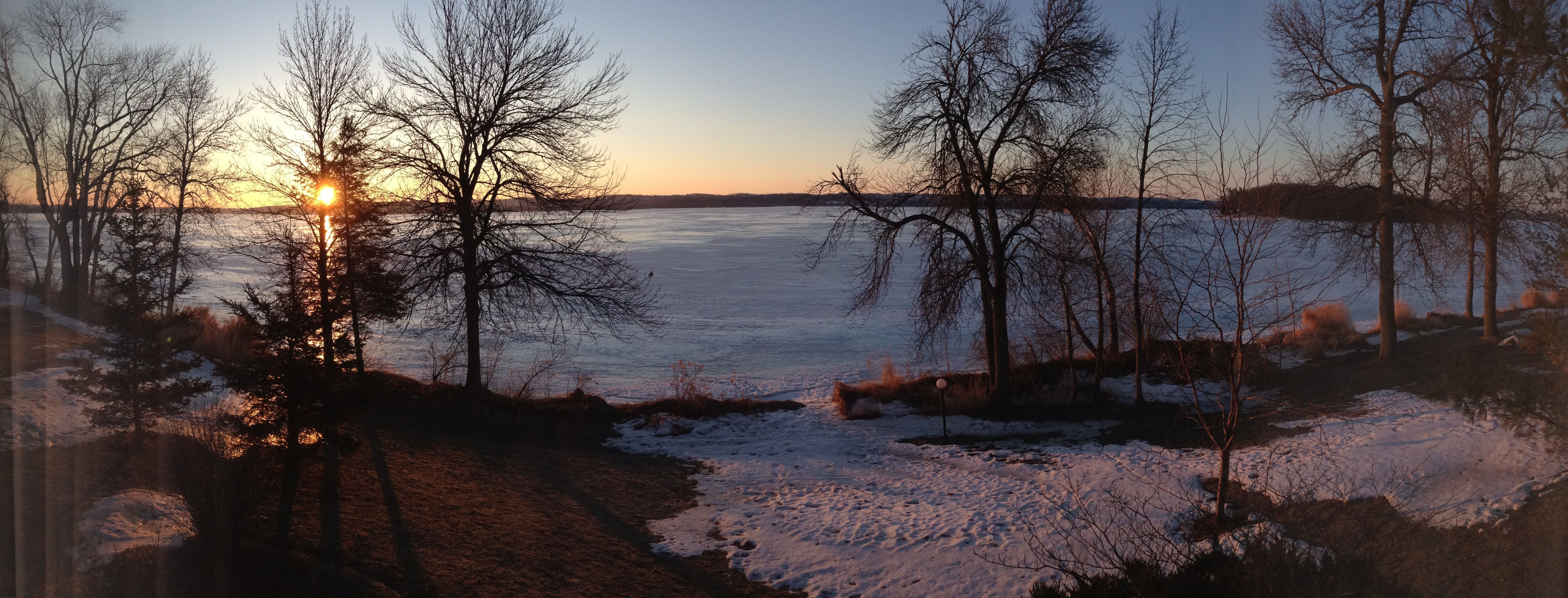
Below is a photo of a lovely morning on Rice Lake

Elrmhirst's Resort, Rice Lake

Eight signs of spring

Signs of spring.

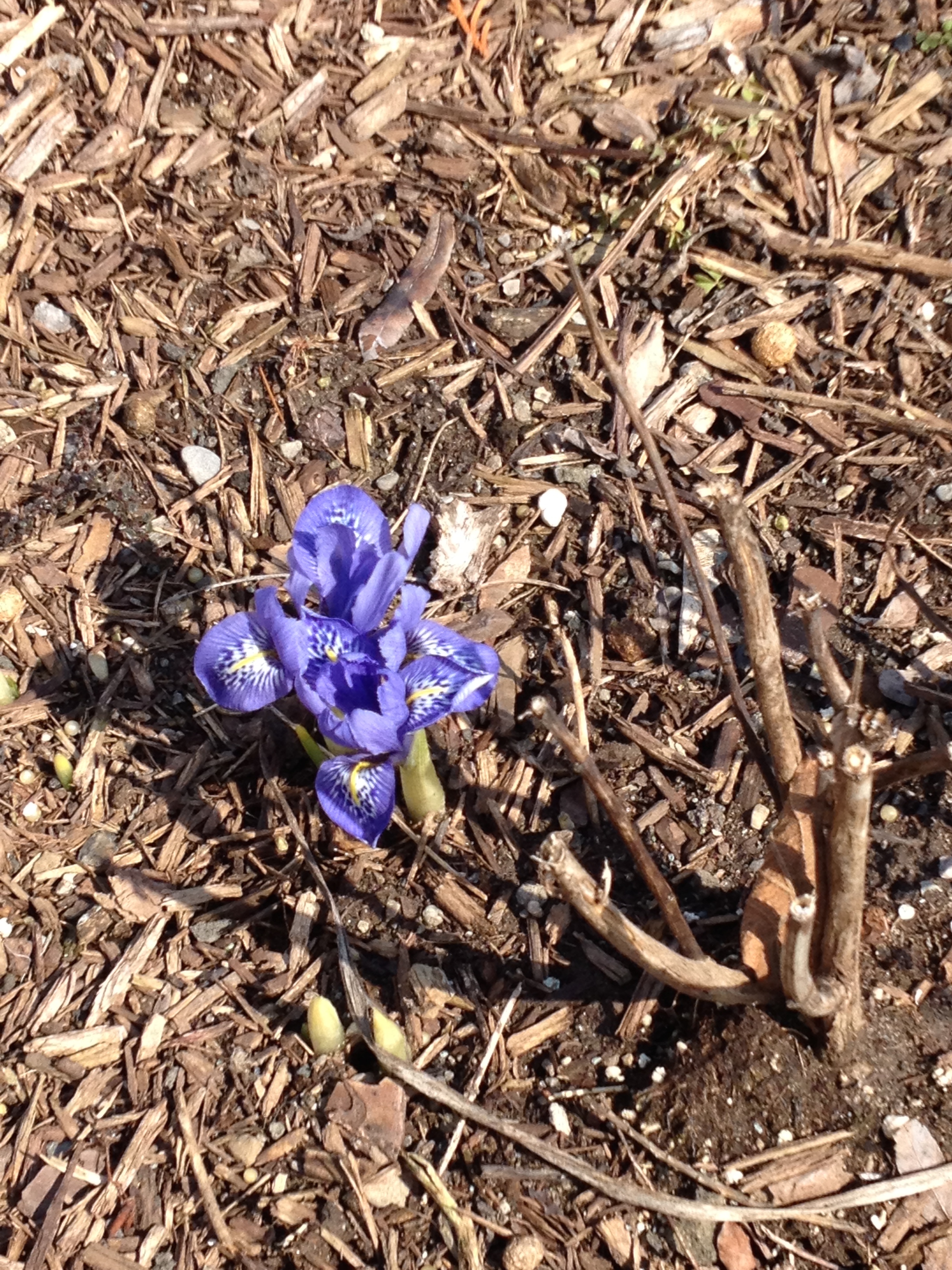
1. A miniature iris is blooming, freckled purple beside the brown sticks of a miniature rose

2. Our landscaper dropped by.

3.The lawn has reappeared sporting mounds and trails created by moles, the entrances to their tunnels as big as holes at the golf course.

4.The river below our house, a stopping-off spot for migrating birds, has welcomed baffle-head ducks, loons, Canada geese, a Great Blue Heron, the returning ospreys and many gulls.

5. Returnees to the feeder include blue jays, cardinals, finches-yellow, purple and the orange variety of house finch, chickadees, woodpeckers.

6. Dogs of all descriptions and their humans have taken to slow ambles along the streets, instead of the head-long rush to get the business done before noses and tails freeze.

7. Ice has left the river.

8 The wild turkeys have left for their home in the bush.Image


Writing and reading and more writing

What with one thing and another, it’s been a while since a new blog appeared in this space. I haven’t been slacking but focussing on three projects.

Revision of A Child for the Taking for the tenth or eleventh time. I’m using AutoCrit to revise this time. The software’s frequency of words feature allows me to rework phrases and sentences, one scene at a time.

Reading Saving Fillide, my work-in-progress up until Christmas. I sent it to my Kindle and reading in book-format allows me to catch and mark errors.

Writing The Spanish Connection(tentative title)  my latest Anne McPhail mystery.

In between I read Will Ferguson’s 419, a brilliant novel until the ending. Although the ending is dramatic and memorable, I didn’t believe it as I had the rest of the novel. The character as I understood her was too clever to make the decisions Ferguson detailed.

Fun reads over this time have been the latest Penny Brannigan mystery set in Wales: Never Laugh As a Hearse Goes By by Elizabeth J. Duncan and a series by Susan Shaber—The Louise Pearlie Mysteries. The latest is Louise’s Dilemma. Great period detail of WWII Washington.  Her Majesty’s Hope , the latest in Susan Elia MacNeal’s Maggie Hope Mysteries is set in Britain during the same time period.

I’m looking forward to attending Writescape’s Spring Thaw with Ruth Walker and Gwynn Scheltema in April at Elmhirst on Rice Lake: great company, opportunities to learn about the craft and free, uninterrupted time to write.

Queen’s Quarterly

Queen’s Quarterly, the magazine of Queen’s University Alumni Association, was established in 1927 and continues publishing today, articles of interest both to alumni/alumnae and to the general public. The current issue includes

Eight years after his first visit to China, PROF. JOHN P. SMOL, PHD’82, one of the world’s foremost environmental scientists,returned to that country to deliver a series of lectures. The Review invited him to report his impressions of China.”

The principal purpose of the Quarterly is to keep alumni up-to-date with the news from the university and each other.

Brian McFadzen an alumnus and friend wrote an article about me and my books that appeared in the latest issue as well.

You can find it here: http://tinyurl.com/qhsxorq

The Dog Days

The Dog Days

An August morning. A  house finches flashes ruby, resting on a daylily stem beneath a yellow flower before attacking the feeder again. The grey squirrel climbs the post and holds on with his hind legs, extracts seeds from the portholes and then feasts while his body sags earthward.

The birds fly away, unwilling to do battle with such a large creature, knowing there’s more food just a short distance in my neighbour’s back yard.

The dog days are supposed to be hot, fit only for lying about on the patio, drinking beer or coolers or wine or gin and tonic, but today opens like a day in September, after a cool night. The yellows and oranges and whites of the August garden, with a hit of vivid mahogany from a daylily whose name I have forgotten turn the cool white and green of early July into a county fair of colour.

All ready we’re thinking of what we should move, where we should cut back, how we should reorder the plantings.

Is it time to simplify? Now that we’re older and the garden is too, do we need to cover some beds with grass and leave the garden to the lawnmower’s whine?

Perhaps some day, but not yet.

The front of the house is more difficult—a smaller space but out-of-control. The heat from the grey stone that encloses four squares and lines the new bed turn the garden from a mid-Ontario zone 5b into something approaching a Mediterranean climate. In June the purple of the lavender loomed over the mauve of mother-of-thyme, set off by stands of daffodils. The lavender and thyme seed everywhere: into the cracks between the pavers, at the edges of other plantings, one tiny grey-green spike of lavender popping up amongst a clump of alyssum. We didn’t plant the alyssum, not this year. Another volunteer who found the winter mild enough to survive.

The roses suffer. Too much heat for varieties bred for a northern climate, like us, perhaps, struggling across the country with weather more suited to southern locales.

Thoughts on Rejection

Should rejection of a piece of writing arrive mere hours after submission, or after months of waiting?

I submitted the same novel to two publishers, one in the UK and one in Canada. The UK publisher is a new enterprise, the Canadian one a press that has been going for years. The UK publisher rejected and notified within a day. I’m still waiting for the Canadian publisher. It’s been 79 days.

I think a month or three of waiting is preferable to a rejection by return e-mail. The latter suggests to me that only the query letter has been read and perhaps not all of that. I purchased a query letter assessment from Writers Digest and the doctored version is the one I send.

Noah Lukeman, in The First Five Pages, states  that agents and editors are looking for reasons to reject, beginning with the presentation and will only read those first five pages. If they can’t find anything there, they will move on to page 99 or read other random selections.

His book details the reasons for rejection and proposes solutions. Each chapter ends with exercises to address the problems.

So what should I do?

Take the first chapter to my critique group? Done.

Ask writing teachers to assess it? Done.

Revise and rewrite? Done.

Ask a beta-reader’s opinion? Done.

I’ve considered posting the first chapter online at Wattpad and inviting comments, but hesitate because some publishers won’t look at anything that has been published in part by others, even oneself.

Should I decide that the manuscript belongs in a drawer? Perhaps, but not yet. I have a few weeks until I want to start serious revision of my work-in-progress, and I think that I will spend them revising A Child for the Taking. Noah Lukeman’s book will be my guide this time.

PMO and the Mounties

I grew up with tales of the Mounties, of their bravery and determination in facing criminals in the early years of Canada’s expansion into the West. Now, in several provinces, they are the community police as they were then.

Maintiens le droit. Defend the law.

In High River, Alberta, homes lay unlocked and unguarded; weapons, mostly, I presume, the long guns that people in farming communities keep for ridding themselves of groundhogs and coyotes. What did the people of Alberta want the Mounties to do? Leave the guns there for anyone to take and perhaps use?

Not according to Premier Alison Redford, quoted in the Globe and Mail: RCMP officers who removed guns from evacuated homes in High River were doing necessary work to secure the flood-ravaged town in a crisis, Premier Alison Redford said in response to criticism.

But the PMO(Harper) knows better. The same article: “We expect that any firearms taken will be returned to their owners as soon as possible,” PMO spokesperson Carl Vallée said in a statement on Friday. “We believe the RCMP should focus on more important tasks such as protecting lives and private property.”

In my view that is what the Mounties were doing when they removed the guns, protecting lives.

Apparently, playing to the hard-core Conservative voter trumps common sense in the PMO.

That same article in the Globe talks about the increasing tendency of the Harper government to interfere in policing decisions.

http://www.theglobeandmail.com/news/politics/pmo-says-the-rcmp-should-have-better-things-to-do-than-seize-guns/article12882952/#dashboard/follows/

University of Ottawa professor Philippe Lagassé, who is an expert on defence and security matters, quoted in the above article:

However, Mr. Lagassé said the PMO was walking a fine line by criticizing the RCMP’s activities, even though it clearly avoided giving a specific directive to the Mounties.

“This is not the norm,” he said. “We can say that we are starting to get into a zone where it is less legitimate for the government to tell the RCMP to follow other priorities,” said Mr. Lagassé.

Does anyone believe the PMO makes its pronouncements without Harper’s hand all over the script. Not our micro-manageing Prime Minister. Where will this need to control end?

Rainy Sunday Morning

This week the peonies burst open, gorgeous Festiva Maxima, white with a hint of pink in its throat, Duchesse de Nemours , deep cream at the centre of white petals, and others, deep pink, that I planted so long ago I’ve forgotten their names. The new ones are still hiding their colour although one has a hint of the promised yellow. I planted a Japanese tree peony two years ago. As I write its candy-pink blossoms are folded in waiting for the sun to encourage them to spread their petals.
Today the peony rains have come, but not so heavily as to shatter the blossoms and smash them to the ground. Ah, even if they are broken, they are worth the heartache of their early loss for the beauty and the scent that perfumes the entire garden.

The OAC application is on its way. Of course I thought, almost at once, of an alternative beginning and a fresh point of view. Too late.

At the last Writescape Writers retreat I attended and again at the Ontario Writer’s Conference, I listened to lectures about archetypes in fiction. I’ve been looking for more information as I had questions. When did one consider archetypes: at the onset of writing, when the book was in first draft, at the end when all would be clear? The books that I have talk about the subject but not enough to satisfy my curiosity so I turned to the internet and the blogosphere.
More confusion ensued. Are there five or twenty-five or a cast of thousands. Some writers seemed to be confusing archetype with stereotype. As I understand it(so far) archetypal characters are found in all eras, across all cultures and express why a character behaves the way he does.
This site is a list of other sites that deal with archetypes, symbols, motifs, etc.
http://freepdfdb.org/doc/archetypes-in-literature-list

Jordan McCollom’s site has a basic description of archetypes and a download of interesting articles on Plotting. Find it here: http://jordanmccollum.com/2009/10/archetypal-characters-heros-journey/

There are many more, hundreds more, sites and essays and university course materials that deal with the subject. And there are always Jung and Northrop Frye to consult.

I’m at the end of writing the first draft of my current work in progress. It will be an interesting and useful exercise, I think, to review my characters with archetypes in mind) as well as symbols, motifs, etc. I see opportunity to strengthen the characters in their various roles, bearing in mind that the characters, like the rest of us, are complex and contradictory and not content to stay where i have slotted them.