Newtown

A police spokesman, struggling to find the way out of his own grief and confusion, said, “I support the second amendment but I think anyone who wants to buy a weapon should have to go through the same testing that we do, like the Minnesota Multiphasic Personality, and training.” That would be a start and cut back dramatically on the number weapons purchased at legitimate gun stores(like the ones the mother of this man owed) and pawn shops. What about gun shows, a major source of weaponry? Thousand attend and buy.

Illegal weapons abound. In this country the guns flow in from the USA. We send them marijauna and they send us weapons of destruction. Millions and millions of handguns and assault weapons are manufactured by companies around the world, enough to outfit thousands of armies and security forces. Are these companies the driving force behind the NRA and their incomprehensible rhetoric? Follow the money.

After the last tragedy, the number of guns purchased increased. “If only someone on the scene had a weapon, he could have been stopped,” they cry. Or more would be killed by the untrained blazing away at the uncaring.

It is the culture of the country, the myths that have to be changed. The worship of a constitution written, not by saints but by flawed men of the eighteenth century. Sensible people recognize that the second amendment refers to what was then the need for a volunteer militia to defend the fledgling country. Other countries, like Switzerland and Israel continue to have that system, but they have conscription and individuals are trained, and the psychotic and unstable are weeded out. Their murder rate is a small fraction, relative to population, to that of the USA.

I fear no change will come out of this tragedy, but I hope that President Obama, no longer facing election, can use this to help the country turn their weapons into lumps of metal.
Christmas Gifts for Writers

A Google search for gifts for writers(or photographers or gardeners) and out comes a list of blogs to newspapers, all advising what to buy. I noticed that only one or two items on each list interested me, so I’ve put together my own. Some are expensive, some not.

1) A writers’ retreat. My favourites are the Writescape retreats organized by Ruth Walker and Gwynne Scheltema. Find them at http://writescape.ca/writescape.

2) Scrivener, a superb writing programme from the folks at Literature and Latte. http://literatureandlatte.com. I’ve been using this gem through two books now and couldn’t do without out. It replaces everything from research notes on random bits of paper to character biographies kept in notebooks without a search function. It   allows the generation of a rudimentary plot synopsis and a virtual corkboard on which scenes can be repositioned. I could go on and on, but try it for a month. Now available for Windows.

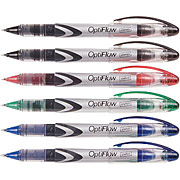
3) Pens: To record those thoughts that would other wise be lost. I like Staples Optiflow: ca709364grp_1_std


4) Books on writing: I love to read books about writing. Writers Digest has a good selection, but there are others:

1. Stephen King, On Writing

2.David Morell: Lessons for a Lifetime of Writing

3.William Brohaugh: Write Tight

4. P. D. James: Talking About Detective Fiction

5. Sol Stein: On Writing

6. Jack Hodgins; a Passion for Narrative

5) A Kindle: Writers need to read everywhere and a Kindle is handy on the subway, in a bus, on that trip to  Europe.

7) Coffee maker, coffee mugs, coffee.

8) A web design package, perhaps from Linda Lyall who did Louise Penny’s http://www.louisepenny.com

9) A smart phone with a camera, because you never know when the perfect scene to jumpstart your imagination will pop up in front of you. (The phone is always in your pocket, unlike your SLR)

10) Time, uninterrupted. If she has children, offer to babysit. If she needs a day away, offer your cottage, or pay for one day in a lovely B&B. I like the Gardener’s Cottage near Elora. http://gardenerscottage.ca

elamediarelations's avatarSave Canada's Experimental Lakes Area

Yesterday, Acting Fisheries Minister Gale Shea fumbled through questions to explain the unsound decision by the federal Department of Fisheries and Oceans (DFO) to cancel its Experimental Lakes Area (ELA) program. Over six months have passed since the announcement that DFO’s ELA facility would be shut down and its team of scientists fired, but Canadians have yet to receive an adequate explanation from DFO justifying this decision.

“It’s time for the people of Canada to hear scientific fact, not political fiction,” asserted Diane Orihel, Director of the Coalition to Save ELA. “The cuts to ELA, including its staff, represent a major loss of scientific capacity within DFO to achieve its strategic outcomes of healthy, aquatic ecosystems and sustainable fisheries and aquaculture.”

Minister Shea responded to questions placed on the Order Paper by MP Robert Chisholm, NDP Fisheries & Oceans Critic. Mr. Chisholm asked what analysis had been done by DFO…

View original post 508 more words

Turning Leaves and other lovely things

Just got back from Writescape’s Turning Leaves retreat at Fern Resort. What a gift to spend a weekend with old friends and new, writers all, concentrating on projects and the writer’s craft. I learned valuable lessons in characterization, especially the Sunday morning session with Gwynn Scheltema and Ruth E. Walker.

Back home, it’s Monday, snow is falling and the carryover from the weekend had me spending it on my work-in-progress. The voices of my characters are  distinct and clear in my head, less so on paper(or the computer screen).

I just started reading Russ King’s Defiant Spirits: The Modernist Revolution of the Group of Seven. A giant Black Willow at the river’s edge, the black water, dotted with a gaggle of Canada Geese who seem to be practicing take-off and landing this morning while working on their group harmony, ice forming, and in the distance a row of white—seagulls resting on a half-submerged log— turn the view from my kitchen window into a Group of Seven landscape.

I’ve started “pinning” to a few boards on Pinterest, a process I didn’t understand until recently. Several writers I know are using it as a sort of giant white board, pinning portions of their wip or research or clippings, to private boards. I am using one for clippings, but the rest to collect and share books and paintings and photographs that I especially like. http://pinterest.com/virginiawinters.

A true tragedy this: the mayor brought down by his fatal flaw, his apparent inability to understand that the rules apply to him.

Book Review: The Judgement of Paris: The Revolutionary Decade that gave the World Impressionism

I’ve just finished reading Ross King’s The Judgment of Paris: The Revolutionary Decade That Gave the World Impressionism (2006). The painters of Impressionism had always interested me, so I was happy to find a writer who placed them in their world, and explained the influences that shaped their work. Ross King does that in a very readable book. My only quibble is with the dearth of coloured plates. Expensive, I know, but I wanted to see more.

The most interesting personality King reveals is that of Meisonnier, a painter, obscure until he began to play a role in King’s book, but a giant in French 19th century art. King contrasts his story, one of success and riches, of obsessive painting and repainting, of intense research into such unlikely subjects as equine locomotion—at one time he built a small railroad on his property and used it to make hundreds of drawings of horses as they ran alongside— with that of the Impressionists, obsessed with light and colour and painting in the open air, and catching the fleeting beauty of a sunrise or a day in the park. Meissonier emerges from King’s pages as a fully realized character, with all his flaws and genius.

King writes so well, I was disappointed when he, or rather events, ended the story with the last Impressionist exhibition. He has gone on to write about The Group of Seven in Defiant Spirits, and more recently Leonardo and the Last Supper, the latter winning him his second Governor General Award. The first was for The Judgement of Paris. Defiant Spirits  is next on my list.

Interest in art history has led me to The Great Courses, and Professor Richard Brettell, teaching From Monet to Van Gogh: A History of Impressionism, an audio-visual course, and excellent companion to King’s book.

Devestation

The shattered homes, the broken lives, the deaths, all of it seen through the eyes of CNN or CBC, all of it, because of the media, through no fault of its own, seeming more like a movie than reality. Ot at least it did until the pictures and interviews from the destroyed neighbourhoods, where one woman, whose home was inundated, whose son who lived in her basement lost everything, talked about her neighbours on the streets to the south being so much worse off than she was. Two small children found today, I understand. The water ripped them from their mother’s arms. A heart-wrenching tragedy among so many.

I heard today that the Hydro crews from Ontario and Quebec and the Maritimes were arriving in the areas without power. A brotherhood seems to prevail amongst the electrical workers, the firemen who fight the forest fires, the carpenters who rebuild the homes. I’m glad the workers went south. The Americans are generous in other people’s disaster. Time to help them out.

I hope the Americans elect a man with a heart on Tuesday, not the man whose only interest is in the bottom line

Home from the Holiday

We have been back from Italy for about a month now. Back to fall settling in, leaves scarlet and yellow and orange, the grass still vivid green, the sky that vibrant, impossible blue, to a garden that needs to be put to bed, and a dog that had given us up as lost.

We spent a week in Venice, staying in an apartment in Castello, one of the sestiere or districts of the city. Castello is off in the east of the city, a workday world for Venetians and a few tourists, but not many since the Biennale ended.

Via Giuseppe Garibaldi was a canal until Napoleon conquered the city and thought it would be more efficient as a street, and so it was filled in and is now one of the few wide streets in the city. But no cars. The only noise at night comes from the bar down below and it ends early as the locals have to get up for bed next day.

There is a Canadian connection on the street. The house on the corner, where the street meets the Riva, was owned by John Cabot. A plaque placed there by the Province of Newfoundland, marks the event. Another by the city of Venice recognizes further explorations to Paraguay by Sebastian Cabot.

Venice and Trieste: Our Italian Holiday

We’ll be in Venice next Saturday, staying in an apartment in Castello, away in the eastern reaches of the city, on Via Garibaldi, close to the site of the Biennale. The pavilions and the park are going to be one of the locations in an upcoming book, so I’m looking forward to a little research in the area.

But mostly we’ll spend the week just living in Venice, dropping into churches and scuolas to see the amazing (and free) art, sitting in cafes and drinking an espresso or an ombra(small glass of wine), walking along the canals or eating ice cream on the Zattere.

The next week we’ll spend in the country. We’ve rented a small house, set in the walls of the Castello di Strassoldo di Sopra in village of the same name. It’s northeast of Venice, about 40km from Trieste. Roman ruins, mountains, beaches, nature resorts, a wine and ham route to follow, and the intriguing city of Trieste to visit: all less than a 2 hour drive from where we are staying, and most within 30 minutes.

Some of the best wine in Italy is produced in the region of the Colline Orientale, so I imagine we’ll drive to that area as well. 

5 Days. I can’t wait.


ec·o·nom·ics: a simple twist on normalcy by Kersten L. Kelley

Today’s guest blogger is Kersten L. Kelley whose new book ec·o·nom·ics: a simple twist on normalcy 

reveals the role economics plays in our lives, from social movements to football. ‘m delighted to have her here today to tell us about herself and her approach to economics

Kersten L. Kelly is a self-published author of narrative non-fiction and semi-fiction books. She grew up in Munster, Indiana, and currently works in a sales role based out of Chicago, Illinois. She started writing at an early age and graduated from Indiana University with a dual Bachelor’s Degree in Economics and Communication & Culture. She then went on to earn a Master’s in Business Administration from the Kelley School of Business at Indiana University. She has a passion for learning, teaching, and writing as well as international travel in her spare time. This book is her first piece of published work.

Kersten:Kersten L. Kelley

When I first started writing as a kid, I never dreamed that I would be able to compose an entire book and actually publish it. The process seemed overwhelming and a massive undertaking, as it most definitely was. I began the writing process, and I found that I was writing little excerpts about economics that really interested me. Usually, I would encounter something in my life and think how economics played a large role in it. The majority of the time, these things seemed like they were unconnected to the naked eye. In particular, my interest in economics blossomed during my college years when I actually started studying it for my degree.

I love economics, and I majored in it during my undergraduate work at Indiana University. As a student, many of the examples in my textbooks were irrelevant and made the subject one that many students did not enjoy. I wanted to change the negative connotations associated with the topic. I wanted to make it something that people understood and relished learning about. I want to shed light on economics as a topic for the average reader. I want them to realize that economics is not just graphs, charts, and theories. It can be applicable in almost any situation. The theories that I explain in the book are developed with multiple examples that readers can relate to. Purchasing gasoline is one of them, and education is another. It is amazing how economic theory can help to explain both.

I liked the ability to argue my opinions, compile them in a written publication, and have readers be able to communicate with me via my website and through reviews. There has been nothing more rewarding than working for a year to create a publication that people can pick up and read. I like the idea that someone else can read what I wrote and discuss it with others. I wanted people to be able to learn from what I wrote, so I took the chance and created the book.

The book is a unique compilation of examples of pop culture, history, social media, business, sports, and education all explained through an economic lens. It uses current market trends and examples that can be applicable and enjoyable for anyone. It is written in a narrative non-fiction format so it flows easily and does not read similarly to a textbook. Economics is part of daily life, and this book challenges readers to question how and why people make decisions by adding a simple twist on normalcy.

Kersten’s website   http://www.theeconomicsbook.com

Kersten’s book on Amazon http://preview.tinyurl.com/9jkmlvv 

Thanks for visiting, Kersten and all the best wishes for your writing career.

Guest Blog—Kersten L. Kelley

On Sept. 5th Kersten L. Kelley will stop by on her blog tour to discuss her new book. economics: a simple twist on normacy.