Writing and reading and more writing

What with one thing and another, it’s been a while since a new blog appeared in this space. I haven’t been slacking but focussing on three projects.

Revision of A Child for the Taking for the tenth or eleventh time. I’m using AutoCrit to revise this time. The software’s frequency of words feature allows me to rework phrases and sentences, one scene at a time.

Reading Saving Fillide, my work-in-progress up until Christmas. I sent it to my Kindle and reading in book-format allows me to catch and mark errors.

Writing The Spanish Connection(tentative title)  my latest Anne McPhail mystery.

In between I read Will Ferguson’s 419, a brilliant novel until the ending. Although the ending is dramatic and memorable, I didn’t believe it as I had the rest of the novel. The character as I understood her was too clever to make the decisions Ferguson detailed.

Fun reads over this time have been the latest Penny Brannigan mystery set in Wales: Never Laugh As a Hearse Goes By by Elizabeth J. Duncan and a series by Susan Shaber—The Louise Pearlie Mysteries. The latest is Louise’s Dilemma. Great period detail of WWII Washington.  Her Majesty’s Hope , the latest in Susan Elia MacNeal’s Maggie Hope Mysteries is set in Britain during the same time period.

I’m looking forward to attending Writescape’s Spring Thaw with Ruth Walker and Gwynn Scheltema in April at Elmhirst on Rice Lake: great company, opportunities to learn about the craft and free, uninterrupted time to write.

Thoughts on Rejection

Should rejection of a piece of writing arrive mere hours after submission, or after months of waiting?

I submitted the same novel to two publishers, one in the UK and one in Canada. The UK publisher is a new enterprise, the Canadian one a press that has been going for years. The UK publisher rejected and notified within a day. I’m still waiting for the Canadian publisher. It’s been 79 days.

I think a month or three of waiting is preferable to a rejection by return e-mail. The latter suggests to me that only the query letter has been read and perhaps not all of that. I purchased a query letter assessment from Writers Digest and the doctored version is the one I send.

Noah Lukeman, in The First Five Pages, states  that agents and editors are looking for reasons to reject, beginning with the presentation and will only read those first five pages. If they can’t find anything there, they will move on to page 99 or read other random selections.

His book details the reasons for rejection and proposes solutions. Each chapter ends with exercises to address the problems.

So what should I do?

Take the first chapter to my critique group? Done.

Ask writing teachers to assess it? Done.

Revise and rewrite? Done.

Ask a beta-reader’s opinion? Done.

I’ve considered posting the first chapter online at Wattpad and inviting comments, but hesitate because some publishers won’t look at anything that has been published in part by others, even oneself.

Should I decide that the manuscript belongs in a drawer? Perhaps, but not yet. I have a few weeks until I want to start serious revision of my work-in-progress, and I think that I will spend them revising A Child for the Taking. Noah Lukeman’s book will be my guide this time.

Rainy Sunday Morning

This week the peonies burst open, gorgeous Festiva Maxima, white with a hint of pink in its throat, Duchesse de Nemours , deep cream at the centre of white petals, and others, deep pink, that I planted so long ago I’ve forgotten their names. The new ones are still hiding their colour although one has a hint of the promised yellow. I planted a Japanese tree peony two years ago. As I write its candy-pink blossoms are folded in waiting for the sun to encourage them to spread their petals.
Today the peony rains have come, but not so heavily as to shatter the blossoms and smash them to the ground. Ah, even if they are broken, they are worth the heartache of their early loss for the beauty and the scent that perfumes the entire garden.

The OAC application is on its way. Of course I thought, almost at once, of an alternative beginning and a fresh point of view. Too late.

At the last Writescape Writers retreat I attended and again at the Ontario Writer’s Conference, I listened to lectures about archetypes in fiction. I’ve been looking for more information as I had questions. When did one consider archetypes: at the onset of writing, when the book was in first draft, at the end when all would be clear? The books that I have talk about the subject but not enough to satisfy my curiosity so I turned to the internet and the blogosphere.
More confusion ensued. Are there five or twenty-five or a cast of thousands. Some writers seemed to be confusing archetype with stereotype. As I understand it(so far) archetypal characters are found in all eras, across all cultures and express why a character behaves the way he does.
This site is a list of other sites that deal with archetypes, symbols, motifs, etc.
http://freepdfdb.org/doc/archetypes-in-literature-list

Jordan McCollom’s site has a basic description of archetypes and a download of interesting articles on Plotting. Find it here: http://jordanmccollum.com/2009/10/archetypal-characters-heros-journey/

There are many more, hundreds more, sites and essays and university course materials that deal with the subject. And there are always Jung and Northrop Frye to consult.

I’m at the end of writing the first draft of my current work in progress. It will be an interesting and useful exercise, I think, to review my characters with archetypes in mind) as well as symbols, motifs, etc. I see opportunity to strengthen the characters in their various roles, bearing in mind that the characters, like the rest of us, are complex and contradictory and not content to stay where i have slotted them.

Elora Writers Festival

On Sunday, May 26, I attended the Elora Writers Festival, an afternoon of readings by six authors, several of them local to Elora-Fergus. One of the readers commented that the day’s readings had taken the audience on a journey from the sexy inhabitants of  Sonia Day’s garden to the streets of Budapest with Ailsa Kay. Andrew Westoll’s The Chimps of Fauna Sanctuary  left some of us with hearts broken by the sadness of their fate  while laughing at the hapless author’s first day among them. Mystery writer Robert Rotenberg is  very much a Toronto man. Indeed the city plays as important a role in his books as some of his characters. Carrie Synder took us to war in Nicaragua and Terry Fallis brought us back to Canada and Northern British Columbia.

I spoke and read at two events so far this year and wanted to learn some of the methods other writers used to keep an audience engaged. Of course the methods used were as diverse as the writers themselves: Sonia Day’s funny, erotic reading, Robert Rotenberg’s engagement of his listeners as a sort of cheering section for a candidate for Mayor of Toronto, Terry Fallis’s sharing of his personal experiences in Northern B.C.

Ailsa Kay: Under Budapest http://gooselane.com/books.php?ean=9780864926814

Carrie Snyder: The Juliet Stories http://www.houseofanansi.com/The-Juliet-Stories-P1302.aspx

Robert Rotenberg: Strangle Hold  http://www.robertrotenberg.com

Sonia Day: The Untamed Garden, A Revealing Look At Our Love Affair with Plants http://www.soniaday.com

Andrew Westoll: The Chimps of Fauna Sanctuary http://www.andrewwestoll.com

Terry Fallis: Up and Down http://terryfallis.com

What did I learn? The audience seemed to respond best to writers who shared parts of their lives as well as their writing.

I’m looking forward to reading Robert Rotenberg’s latest. He inscribed it for me and when I told him I also wrote,  encouraged me to “write every day”.

A fun, interesting afternoon. Don’t miss it in 2014.

Otherwise, we had  a terrific weekend staying with our friends at The Gardeners Cottage. http://gardenerscottage.ca

Spring and Writing

Spring. Planted three roses today, deadheaded the daffodils, revised my talk for tomorrow night at the City of Kawartha Lakes Library, Lindsay branch, and continued revision of my work in progress.

On Saturday I attended the Ontario Writers Conference, and I must say the workshops and lectures were very useful. I especially appreciated the session on grammar by Cathy Witlox, who teaches at Ryerson and is the only grammar enthusiast I’ve ever met. She discussed an error I’d been making for years(unbeknownst to me) and how to correct it. I had been creating run-on sentences such as this. “He braked, then skidded off the road.” instead of He braked and then skidded off the road.” I didn’t always leave out the conjunction, but often enough.

I also appreciated a talk by Annette McLeod on characters and the role of archetypes in fiction.

I’ve sent a book out to be considered by a traditional publisher, without an agent, but after listening to Kobo executive and novelist Mark Lefebvre on self-publishing, I’m giving that more thought.

A great conference—lots to learn, old friends to meet and new ones to make. I’ll be going next year.

What’s next in the garden? I have hardy cyclamen to plant and one hundred summer bulbs that came free with my cyclamen order and a gift of a dinner plate dahlia. I haven’t grown dahlias, but I’ll give it a try. Haven’t even looked at annuals yet.

It’s difficult to focus on writing in the mornings, with the birds singing outside the window and the bulbs yelling from the garage that they want to go in the ground, but I keep trying.

Books about Writing

Long ago I took one English course at University. At the time, I was so intent on medicine and my science courses that I failed to take advantage of an opportunity. The teacher was Tom Marshall, Canadian poet. He was working on his MA that year and I think we were one of the first classes he had to teach. What an ordeal that must have been— bored medical students and engineers, most of us.

I remember being terrified most of that first year, felt unprepared and well out of my depth. I produced nothing good enough even for a B. I’d closed my mind to writing.

Now, I’m trying to catch up, to learn what I should have then, and so, I read books about writing.

Sol Stein: On Writing, St. Martin’s Griffin, New York.

I didn’t know his name when I found him on a list of writing teachers. He has written several books including On Writing, How to Grow a Novel, and Sol Stein’s Reference Book for Writers. He worked as an editor and publisher and playwright and successful novelist.

He also has developed a computer programme to teach the writers craft: the new Write Pro.

I haven’t bought the programme, but I have read the books, and tried to use his techniques in my writing. His lessons about revision, what he calls his triage method, focus on plot and character, major areas that always need work. When he does get to the front to back revision, he suggests scene by scene decision. Does it work? If not, out it goes.

Nancy Kress: Characters, Emotion and Viewpoint, Writer’s Digest Books.

I took a brief on-line course at Writer’s Digest some years ago, on character development and recently read the book that accompanied it again. Or rather, am  reading it, because I’m in the process of revision and need to understand characterization more than I do. Nancy Kress taught the course and the characters I developed with her and their conflict form the nucleus of the book that I’m revising.

Theses are just two of the books on my shelf. Useful additions to any writer’s library.

Christmas Gifts for Writers

A Google search for gifts for writers(or photographers or gardeners) and out comes a list of blogs to newspapers, all advising what to buy. I noticed that only one or two items on each list interested me, so I’ve put together my own. Some are expensive, some not.

1) A writers’ retreat. My favourites are the Writescape retreats organized by Ruth Walker and Gwynne Scheltema. Find them at http://writescape.ca/writescape.

2) Scrivener, a superb writing programme from the folks at Literature and Latte. http://literatureandlatte.com. I’ve been using this gem through two books now and couldn’t do without out. It replaces everything from research notes on random bits of paper to character biographies kept in notebooks without a search function. It   allows the generation of a rudimentary plot synopsis and a virtual corkboard on which scenes can be repositioned. I could go on and on, but try it for a month. Now available for Windows.

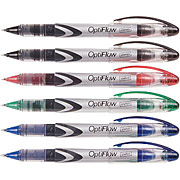
3) Pens: To record those thoughts that would other wise be lost. I like Staples Optiflow: ca709364grp_1_std


4) Books on writing: I love to read books about writing. Writers Digest has a good selection, but there are others:

1. Stephen King, On Writing

2.David Morell: Lessons for a Lifetime of Writing

3.William Brohaugh: Write Tight

4. P. D. James: Talking About Detective Fiction

5. Sol Stein: On Writing

6. Jack Hodgins; a Passion for Narrative

5) A Kindle: Writers need to read everywhere and a Kindle is handy on the subway, in a bus, on that trip to  Europe.

7) Coffee maker, coffee mugs, coffee.

8) A web design package, perhaps from Linda Lyall who did Louise Penny’s http://www.louisepenny.com

9) A smart phone with a camera, because you never know when the perfect scene to jumpstart your imagination will pop up in front of you. (The phone is always in your pocket, unlike your SLR)

10) Time, uninterrupted. If she has children, offer to babysit. If she needs a day away, offer your cottage, or pay for one day in a lovely B&B. I like the Gardener’s Cottage near Elora. http://gardenerscottage.ca

Turning Leaves and other lovely things

Just got back from Writescape’s Turning Leaves retreat at Fern Resort. What a gift to spend a weekend with old friends and new, writers all, concentrating on projects and the writer’s craft. I learned valuable lessons in characterization, especially the Sunday morning session with Gwynn Scheltema and Ruth E. Walker.

Back home, it’s Monday, snow is falling and the carryover from the weekend had me spending it on my work-in-progress. The voices of my characters are  distinct and clear in my head, less so on paper(or the computer screen).

I just started reading Russ King’s Defiant Spirits: The Modernist Revolution of the Group of Seven. A giant Black Willow at the river’s edge, the black water, dotted with a gaggle of Canada Geese who seem to be practicing take-off and landing this morning while working on their group harmony, ice forming, and in the distance a row of white—seagulls resting on a half-submerged log— turn the view from my kitchen window into a Group of Seven landscape.

I’ve started “pinning” to a few boards on Pinterest, a process I didn’t understand until recently. Several writers I know are using it as a sort of giant white board, pinning portions of their wip or research or clippings, to private boards. I am using one for clippings, but the rest to collect and share books and paintings and photographs that I especially like. http://pinterest.com/virginiawinters.

A true tragedy this: the mayor brought down by his fatal flaw, his apparent inability to understand that the rules apply to him.

ec·o·nom·ics: a simple twist on normalcy by Kersten L. Kelley

Today’s guest blogger is Kersten L. Kelley whose new book ec·o·nom·ics: a simple twist on normalcy 

reveals the role economics plays in our lives, from social movements to football. ‘m delighted to have her here today to tell us about herself and her approach to economics

Kersten L. Kelly is a self-published author of narrative non-fiction and semi-fiction books. She grew up in Munster, Indiana, and currently works in a sales role based out of Chicago, Illinois. She started writing at an early age and graduated from Indiana University with a dual Bachelor’s Degree in Economics and Communication & Culture. She then went on to earn a Master’s in Business Administration from the Kelley School of Business at Indiana University. She has a passion for learning, teaching, and writing as well as international travel in her spare time. This book is her first piece of published work.

Kersten:Kersten L. Kelley

When I first started writing as a kid, I never dreamed that I would be able to compose an entire book and actually publish it. The process seemed overwhelming and a massive undertaking, as it most definitely was. I began the writing process, and I found that I was writing little excerpts about economics that really interested me. Usually, I would encounter something in my life and think how economics played a large role in it. The majority of the time, these things seemed like they were unconnected to the naked eye. In particular, my interest in economics blossomed during my college years when I actually started studying it for my degree.

I love economics, and I majored in it during my undergraduate work at Indiana University. As a student, many of the examples in my textbooks were irrelevant and made the subject one that many students did not enjoy. I wanted to change the negative connotations associated with the topic. I wanted to make it something that people understood and relished learning about. I want to shed light on economics as a topic for the average reader. I want them to realize that economics is not just graphs, charts, and theories. It can be applicable in almost any situation. The theories that I explain in the book are developed with multiple examples that readers can relate to. Purchasing gasoline is one of them, and education is another. It is amazing how economic theory can help to explain both.

I liked the ability to argue my opinions, compile them in a written publication, and have readers be able to communicate with me via my website and through reviews. There has been nothing more rewarding than working for a year to create a publication that people can pick up and read. I like the idea that someone else can read what I wrote and discuss it with others. I wanted people to be able to learn from what I wrote, so I took the chance and created the book.

The book is a unique compilation of examples of pop culture, history, social media, business, sports, and education all explained through an economic lens. It uses current market trends and examples that can be applicable and enjoyable for anyone. It is written in a narrative non-fiction format so it flows easily and does not read similarly to a textbook. Economics is part of daily life, and this book challenges readers to question how and why people make decisions by adding a simple twist on normalcy.

Kersten’s website   http://www.theeconomicsbook.com

Kersten’s book on Amazon http://preview.tinyurl.com/9jkmlvv 

Thanks for visiting, Kersten and all the best wishes for your writing career.
Publishing and still more waiting.

The printer finally shipped a book to me. A book, not my book, so I’m back to waiting. Strange business, publishing.
While I’ve been waiting, I’m polishing another novel, and have it almost ready to go. It is set in Toronto, with side trips to Rome, Venice, Florence and Dubrovnik. A lot of fun to write. It’s working title is HIDDEN.
I’ve started planning another, which occupies my thoughts much of the day. This one will require more research, especially into the world of art restoration.

Sakineh Ashtiani still sits in that Iranian jail, awaiting her stoning sentence to be carried out. Latest news is at this link:
http://preview.tinyurl.com/d5bpwvs