Stone Patrick author interview

What inspired you to write your first book?
I initially thought of writing as a way to make money, and lots of it, but as I did more research, I read time and time again that most writers will never be able to support themselves with their writing alone. That was a sobering thought, but I didn’t want that to stop me from at least trying. I continued to read books about how to write — I bought at least 20-25 books, some of which I have read multiple times — and when I tried it for myself, I felt a real sense of accomplishment when I wrote something that moved people emotionally. It’s that acclamation from other people that motivates me to continue writing.
Do you have a specific writing style?
Yes, I try to write simple sentences, changing the structure to make it easy to follow, and I don’t use big words that most people won’t know the meaning of. I like to think that my dialogue is full of conflict and reflects the characters’ traits and biases. When I write, I try not to create word combinations that would sound foreign if they were spoken out loud. I believe my style of writing is conversational and smooth, and that it conjures up images in the reader’s mind that are specific to that individual, instead of being so descriptive that there is only one possible image that can be thought of.
How did you come up with the title?
In coming up with the title, I wanted something simple that would be easy to say, not easily misunderstood, and was based on the crime that needed to be solved. It started out as a working title, and by the time the book was completed, I couldn’t think of anything else that personified both the crime and the one responsible for what happened.
Is there a message in your novel that you want readers to grasp?
The book starts out focusing on the death of Neil Baines, and how a small-town lawyer, Taylour Dixxon, found herself defending his wife, who is the one accused of perpetrating the crime. I chose a small-town lawyer because I wanted to highlight the challenges that these sole practitioners face, day in and day out, as they try to practice law outside of the big city. The message that I want the reader to come away with is that the job of a lawyer, especially in a small town, is vitally important to the sustainability of order in society. It can sometimes be a thankless job, but in the end, Taylour knows that this is where she belongs.
How much of the book is realistic?
I took bits and pieces of places and buildings that I know and made a fictitious town of Marlinsville, TX. Some of the pieces were patterned after where I live, with certain names of restaurants and streets and festivals that are similar, and I chose a central county in Texas (Falls) and the county seat (Marlin) for the actual spot on the map, but the description of the town itself is made up and has no similarities to the actual town of Marlin, TX.
Are the experiences in the book based on someone you know, or events in your own life?
Not at all. I did reach out to a small town attorney named J. Burton Hunter, III who helped me with some of the legal questions that I had, but the characters and experiences are not based on any actual events.
What books have most influenced your life the most?
The books that have influenced me the most are the scriptures of my church, including the Holy Bible and The Book of Mormon, as well as the books that I have read of several mystery authors, John Grisham, Dick Francis, Jeffrey Archer, just to name a few.
Is there anything you find particularly challenging in your writing?
My biggest challenge is finding the time to do everything that I need to do with the limited resources that I have. Between writing, spending time with my family, working my day job, fulfilling my church responsibilities, marketing my book, and a thousand other things, I never seem to have enough time to do everything that I want. I am not good at prioritizing my time, and I do like to watch certain TV shows that I can’t seem to give up.
What was the hardest part of writing your book?
The hardest part was trying to tie everything together. I wanted to use most of what I wrote, but some of the scenes didn’t always fit, so I either had to adapt the scene or cut it all together if it didn’t move the story along. Also, there were times when I was simply too exhausted to type any further, but I needed to complete the scene so that I wasn’t falling behind schedule. I had to push through that more than once.
Do you have any advice for other writers?
Write what you know, and don’t be afraid to create characters that have flaws. No one likes a perfect protagonist or someone who is always happy. Inject humor when possible, but don’t overdo it. Decide early on if you want to write for the sheer joy of writing, or if you want an audience. If you want to write for an audience, then know who that audience is and write as much as you can.

Also, you need to read about the art of writing! Study and see examples of different points of view, learn how to develop plot and characters, and understand the underlying structure of a great story.

And finally, tell everyone that you are writing a book because 1) people think it’s cool that you are a future author, 2) it will motivate you to keep writing when your friends and family constantly ask about your book, and 3) it will help you to sell more books because you are creating buzz, and buzz sells.

This interview first appeared on Smashwords.
Debut Suspense Novel from Stone Patrick

Stone Patrick’s debut novel, The Fallen Body, takes us to the heartland of Texas, to the fictional small town of Marlinsville, and young lawyer Taylour Dixxon. She focuses her practice on civil law but yearns for the big case. No one tells her to be careful what she wishes for.

One day, she meets Sarah Baines, a woman from New Jersey, befriends her and invites her to dinner. This is Taylour’s last peaceful moment for many weeks. The Texas Rangers burst in and arrest Sarah for the murder of her husband.

Taylour takes the case and before the murder is solved, finds herself saddled with a charming nephew, Spencer, almost loses her home and her life at the hands of the Russian mobster, Roman Danshov, and falls in love with Texas Ranger Philip Davidson. A wild ride, to be sure.


I enjoyed this densely-plotted debut novel, with its varied cast of characters.

Taylour, a feisty young woman at the beginning of her career, struggling with aggressive clients, and a Texas Ranger who distracts her from her work, deserves another outing. I hope Patrick has something more planned for her.

Spencer, my favorite 23 year-old going on 17, arrives with a show of adolescent bravado, but grows up during the novel time, and demonstrates his bravery at the conclusion.

Like many debut novels, The Fallen Body would benefit from a professional edit. However, if you enjoy romantic suspense and don’t demand foul language, explicit sex scenes or gratuitous violence, but want a book to keep you turning the pages, try The Fallen Body.

Watch for an interview with Stone Patrick on Wednesday, May 7.

The Fallen Body is available from Smashwords at the following link:

http://www.smashwords.com/books/view/402747?ref=tayman0522


James Scott Bell and the Magical Mirror Moment

Storytelling has a rhythm, a structure based on centuries of tales recounted wherever people sat together, around a fire, or a table, at a bedside or in a classroom. Three acts, a middle turning point, a crisis and a denouement comprise most. Simple enough, I hear someone say. Not at all.

Countless books on writing have dealt with the structure of novels, and now websites devoted to writing and bloggers eager to help other writers, do the same.

Until my current WIP(work-in-progress), I’d been a pantster, getting on with writing and worrying about structure later. This time, I plotted and outlined and followed my work count, making sure that the ends of the acts fell where they should, that there was a middle turning point, that a hook moment existed, not too far into the first act and so on, and so on. All great, until James Scott Bell wrote Write Your Novel from the Middle, a terrific(and short) book that defines a mirror moment, at the exact middle of the book, in which the protagonist assesses herself, and makes a decision based on her own psychology, what sort of person she is going to be, or assesses the forces against her and the certainty of her death, whether physical, psychological, or professional. From that, the writer develops the pre-psychology and post-psychology. So far so good. Then he writes about the two pillars, or doorways of no return. I was familiar with those. I’d read his excellent book Plot and Structure. So now the novel has three points: a first doorway at about 20% in, the mirror moment and 50% and the final act, again shorter at 20%. Other writers suggest longer first and final acts.

His description of the method is clear and freeing. Writing the mirror moment, the point of realization, means the first half must lead to this moment and the second half lead to the crisis and transformation.

My personal problem with this is that the WIP was more than half done when I read about the mirror moment. It turns out that this is not the problem, but part of the solution. I found my mirror moment, tucked into the middle of the book, where it belonged, and now I’m revising with a surer grasp of where I need to strengthen the plot or make the psychologic pressures clearer.

So yet again, I’m grateful to James Scott Bell, for his concise, entertaining and useful books about writing. I buy them on Amazon at http://www.amazon.com/James-Scott-Bell/e/B000APSY8A or at Writers Digest Shops http://www.writersdigestshop.com/catalogsearch/result/?q=james+scott+bell

Disclaimer: No connection whatsoever with James Scott Bell, except that of reader and student.

A Community of Writers


I spent three days at Elmhirst’s Resort on Rice Lake with the group attending Writescape’s Spring Thaw. The purpose of the retreat is to allow time for writing without the distractions of every-day life: no meals to make, laundry to do, groceries to buy, questions to answer. Peace and time. I wrote 3000 words of my next Anne McPhail, Dangerous Journeys adventure! Productive days for me.
But that isn’t why I go as often as I can to Writescape’s retreats. I find a community of writers there, women who are open, supportive, affectionate and non-judgemental. Writing is a solitary occupation, but anyone who has worked without a community as I did as a solo paediatrician in a small town, knows that support from others  is invaluable.
Most of the women, except for one stalwart who flies in from the west, live and write in the communities to the south of mine—Ajax, Whitby, Pickering—but come together at the Writers Community of Durham Region. Time, perhaps for me to join them and grow my personal circle.

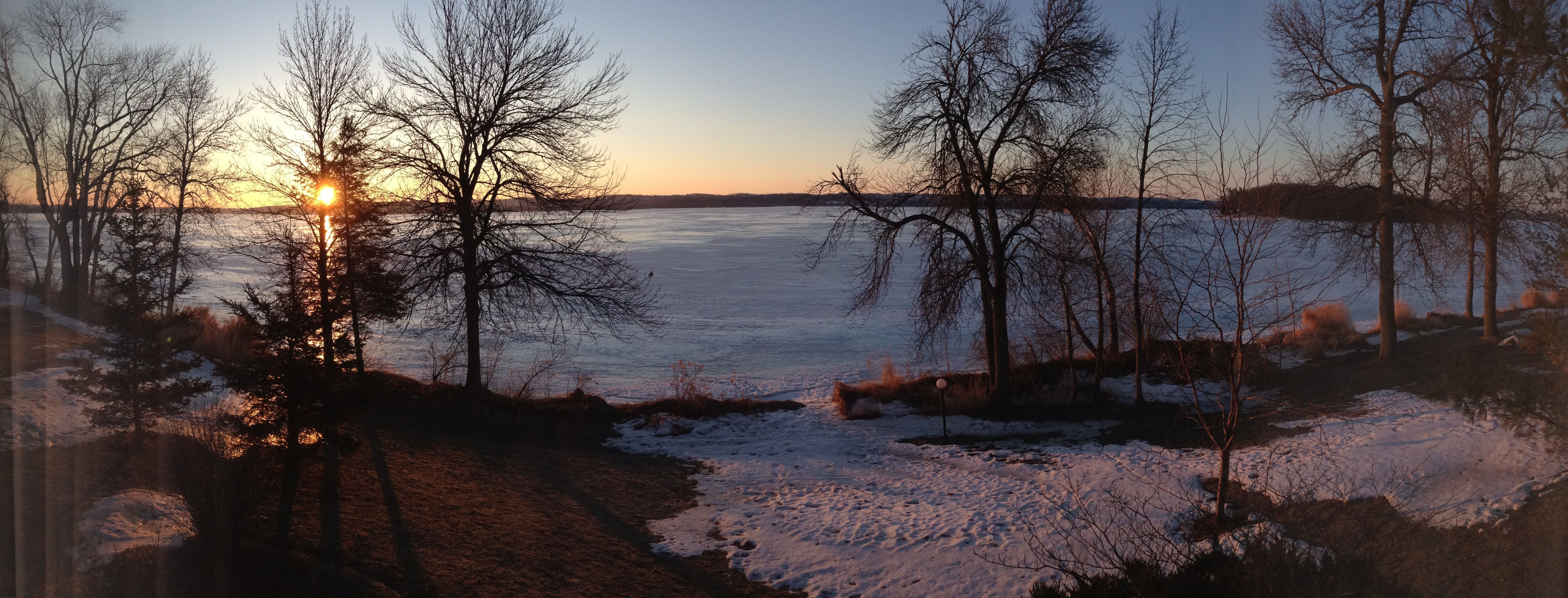
Below is a photo of a lovely morning on Rice Lake

Elrmhirst's Resort, Rice Lake

Writing and reading and more writing

What with one thing and another, it’s been a while since a new blog appeared in this space. I haven’t been slacking but focussing on three projects.

Revision of A Child for the Taking for the tenth or eleventh time. I’m using AutoCrit to revise this time. The software’s frequency of words feature allows me to rework phrases and sentences, one scene at a time.

Reading Saving Fillide, my work-in-progress up until Christmas. I sent it to my Kindle and reading in book-format allows me to catch and mark errors.

Writing The Spanish Connection(tentative title)  my latest Anne McPhail mystery.

In between I read Will Ferguson’s 419, a brilliant novel until the ending. Although the ending is dramatic and memorable, I didn’t believe it as I had the rest of the novel. The character as I understood her was too clever to make the decisions Ferguson detailed.

Fun reads over this time have been the latest Penny Brannigan mystery set in Wales: Never Laugh As a Hearse Goes By by Elizabeth J. Duncan and a series by Susan Shaber—The Louise Pearlie Mysteries. The latest is Louise’s Dilemma. Great period detail of WWII Washington.  Her Majesty’s Hope , the latest in Susan Elia MacNeal’s Maggie Hope Mysteries is set in Britain during the same time period.

I’m looking forward to attending Writescape’s Spring Thaw with Ruth Walker and Gwynn Scheltema in April at Elmhirst on Rice Lake: great company, opportunities to learn about the craft and free, uninterrupted time to write.

Thoughts on Rejection

Should rejection of a piece of writing arrive mere hours after submission, or after months of waiting?

I submitted the same novel to two publishers, one in the UK and one in Canada. The UK publisher is a new enterprise, the Canadian one a press that has been going for years. The UK publisher rejected and notified within a day. I’m still waiting for the Canadian publisher. It’s been 79 days.

I think a month or three of waiting is preferable to a rejection by return e-mail. The latter suggests to me that only the query letter has been read and perhaps not all of that. I purchased a query letter assessment from Writers Digest and the doctored version is the one I send.

Noah Lukeman, in The First Five Pages, states  that agents and editors are looking for reasons to reject, beginning with the presentation and will only read those first five pages. If they can’t find anything there, they will move on to page 99 or read other random selections.

His book details the reasons for rejection and proposes solutions. Each chapter ends with exercises to address the problems.

So what should I do?

Take the first chapter to my critique group? Done.

Ask writing teachers to assess it? Done.

Revise and rewrite? Done.

Ask a beta-reader’s opinion? Done.

I’ve considered posting the first chapter online at Wattpad and inviting comments, but hesitate because some publishers won’t look at anything that has been published in part by others, even oneself.

Should I decide that the manuscript belongs in a drawer? Perhaps, but not yet. I have a few weeks until I want to start serious revision of my work-in-progress, and I think that I will spend them revising A Child for the Taking. Noah Lukeman’s book will be my guide this time.

Rainy Sunday Morning

This week the peonies burst open, gorgeous Festiva Maxima, white with a hint of pink in its throat, Duchesse de Nemours , deep cream at the centre of white petals, and others, deep pink, that I planted so long ago I’ve forgotten their names. The new ones are still hiding their colour although one has a hint of the promised yellow. I planted a Japanese tree peony two years ago. As I write its candy-pink blossoms are folded in waiting for the sun to encourage them to spread their petals.
Today the peony rains have come, but not so heavily as to shatter the blossoms and smash them to the ground. Ah, even if they are broken, they are worth the heartache of their early loss for the beauty and the scent that perfumes the entire garden.

The OAC application is on its way. Of course I thought, almost at once, of an alternative beginning and a fresh point of view. Too late.

At the last Writescape Writers retreat I attended and again at the Ontario Writer’s Conference, I listened to lectures about archetypes in fiction. I’ve been looking for more information as I had questions. When did one consider archetypes: at the onset of writing, when the book was in first draft, at the end when all would be clear? The books that I have talk about the subject but not enough to satisfy my curiosity so I turned to the internet and the blogosphere.
More confusion ensued. Are there five or twenty-five or a cast of thousands. Some writers seemed to be confusing archetype with stereotype. As I understand it(so far) archetypal characters are found in all eras, across all cultures and express why a character behaves the way he does.
This site is a list of other sites that deal with archetypes, symbols, motifs, etc.
http://freepdfdb.org/doc/archetypes-in-literature-list

Jordan McCollom’s site has a basic description of archetypes and a download of interesting articles on Plotting. Find it here: http://jordanmccollum.com/2009/10/archetypal-characters-heros-journey/

There are many more, hundreds more, sites and essays and university course materials that deal with the subject. And there are always Jung and Northrop Frye to consult.

I’m at the end of writing the first draft of my current work in progress. It will be an interesting and useful exercise, I think, to review my characters with archetypes in mind) as well as symbols, motifs, etc. I see opportunity to strengthen the characters in their various roles, bearing in mind that the characters, like the rest of us, are complex and contradictory and not content to stay where i have slotted them.

Elora Writers Festival

On Sunday, May 26, I attended the Elora Writers Festival, an afternoon of readings by six authors, several of them local to Elora-Fergus. One of the readers commented that the day’s readings had taken the audience on a journey from the sexy inhabitants of  Sonia Day’s garden to the streets of Budapest with Ailsa Kay. Andrew Westoll’s The Chimps of Fauna Sanctuary  left some of us with hearts broken by the sadness of their fate  while laughing at the hapless author’s first day among them. Mystery writer Robert Rotenberg is  very much a Toronto man. Indeed the city plays as important a role in his books as some of his characters. Carrie Synder took us to war in Nicaragua and Terry Fallis brought us back to Canada and Northern British Columbia.

I spoke and read at two events so far this year and wanted to learn some of the methods other writers used to keep an audience engaged. Of course the methods used were as diverse as the writers themselves: Sonia Day’s funny, erotic reading, Robert Rotenberg’s engagement of his listeners as a sort of cheering section for a candidate for Mayor of Toronto, Terry Fallis’s sharing of his personal experiences in Northern B.C.

Ailsa Kay: Under Budapest http://gooselane.com/books.php?ean=9780864926814

Carrie Snyder: The Juliet Stories http://www.houseofanansi.com/The-Juliet-Stories-P1302.aspx

Robert Rotenberg: Strangle Hold  http://www.robertrotenberg.com

Sonia Day: The Untamed Garden, A Revealing Look At Our Love Affair with Plants http://www.soniaday.com

Andrew Westoll: The Chimps of Fauna Sanctuary http://www.andrewwestoll.com

Terry Fallis: Up and Down http://terryfallis.com

What did I learn? The audience seemed to respond best to writers who shared parts of their lives as well as their writing.

I’m looking forward to reading Robert Rotenberg’s latest. He inscribed it for me and when I told him I also wrote,  encouraged me to “write every day”.

A fun, interesting afternoon. Don’t miss it in 2014.

Otherwise, we had  a terrific weekend staying with our friends at The Gardeners Cottage. http://gardenerscottage.ca

Spring and Writing

Spring. Planted three roses today, deadheaded the daffodils, revised my talk for tomorrow night at the City of Kawartha Lakes Library, Lindsay branch, and continued revision of my work in progress.

On Saturday I attended the Ontario Writers Conference, and I must say the workshops and lectures were very useful. I especially appreciated the session on grammar by Cathy Witlox, who teaches at Ryerson and is the only grammar enthusiast I’ve ever met. She discussed an error I’d been making for years(unbeknownst to me) and how to correct it. I had been creating run-on sentences such as this. “He braked, then skidded off the road.” instead of He braked and then skidded off the road.” I didn’t always leave out the conjunction, but often enough.

I also appreciated a talk by Annette McLeod on characters and the role of archetypes in fiction.

I’ve sent a book out to be considered by a traditional publisher, without an agent, but after listening to Kobo executive and novelist Mark Lefebvre on self-publishing, I’m giving that more thought.

A great conference—lots to learn, old friends to meet and new ones to make. I’ll be going next year.

What’s next in the garden? I have hardy cyclamen to plant and one hundred summer bulbs that came free with my cyclamen order and a gift of a dinner plate dahlia. I haven’t grown dahlias, but I’ll give it a try. Haven’t even looked at annuals yet.

It’s difficult to focus on writing in the mornings, with the birds singing outside the window and the bulbs yelling from the garage that they want to go in the ground, but I keep trying.

Bermuda Railway Trail

Bermuda

If you’ve never been to this jewel of an island, you’re missing one of nature’s loveliest destinations. Walkers, divers, shoppers, beach lovers and birders can all find something wonderful here.

The Bermuda Railway trail http://www.bermudarailway.net/now/trail.html, is one of those wonders. Converted from the right-of-way of the little train that carried passengers for the 22 mile length of the islands, it now allows walkers an intimate view of Bermuda. Evocative names like Khyber Pass and Coney Island, identify various sections.

It’s a romantic walk, befitting Bermuda’s history as a destination for honeymooners, so romantic that I chose Khyber Pass as the setting for one of the characters in my recent novel No Motive For Murder propose to propose to his girl.

I found the perfect site for one of the murders in a pedestrian tunnel along a different stretch. When your rambles take you into Somerset, check out the nature reserves that thanks to concerned citizens and the National Trust, are saving wetland and habitat for birds and other creatures.

Put Bermuda on your must-see list, and not just for Elbow Beach, one of the world’s best.

Check out http://www.gotobermuda.com/default for information on visiting Bermuda

http://preview.tinyurl.com/camyphx for information of No Motive for Murder or click the link to the right.